

Central Air Conditioner Installation in Medford, MA
For the great bulk of houses, central air installation is complicated and fraught with threat to try without expert assistance. This is owing to the know-how necessary, the administrative wrangling of authorizations and licensing requirements, and the threat of voiding service warranties if the elements are set up wrongly.
What do Central Air Conditioners do?
A central air conditioner cools air in one spot before distributing it throughout the home utilizing the furnace’s air handling capabilities. This sets it apart from window or wall air conditioning system or mini-split systems, which all chill reasonably tiny areas and require many systems to cool the entire home.
The majority of single-family homes in the United States with main air utilize a split system. This indicates that the device is divided into 2 parts: an evaporator coil within home and a compressor outside.

Working With Professional Central Air Conditioner Installers in Medford, MA
When consulting with specialists, ask about their method to the task. Pay attention to the questions they ask! An installer should ask clarifying concerns so that your choices and preferences are represented in their price quote and the end outcome.
Planning for Central Air Installation in in Medford
Installing central air conditioning is a big endeavor that needs substantial preparation ahead of time. Request that your professional check their procedure and verify that they will handle any needed permits or other important documentation.
Go over with your professional how much you value energy effectiveness above preliminary expenditure. This is also an excellent moment to talk about the position of the condenser system and the type of thermostat you select.
Sizing for your Central Air Conditioner
Your professional will help you in figuring out the appropriate size main air conditioner for your house. A unit that is too small will run virtually constantly, whereas a system that is too big will chill the house too quickly and shut off before completing a full cycle.
The fast on/off in the latter circumstance is taxing on the system. It can cause the evaporator coil to freeze, and a frozen coil prevents air from flowing. As a outcome, a big air conditioning unit might be less effective at cooling than a smaller system.
Your Air Conditioner installation will do a computation called a “Manual-J” to recognize best system for your home. This will consider all of the specifications we’ve discussed and more, leading to the most exact size possible.
However, we understand that many house owners like to have a basic notion of what size they require ahead of time. Here’s a rough estimate of main air conditioner size: To get the Btu needed, increase the square video footage of your house’s conditioned area by 25, then divide by 12,000 to get the tonnage.
Keep in mind that this is merely a standard estimate, and there are several aspects. If your house’s very first floor has 12-foot ceilings, the air conditioner will have more air to chill.
Getting an Estimate for a Central Air Conditioner in Medford, MA
As soon as you’ve gone over the basic plan and talked about design possibilities, the professional ought to use you an estimate. As always, obtain written price quotes from numerous companies. The only exception would be if you’re setting up cooling in a brand-new house, because the home builder will more than likely handle it.
When working with a home builder or independent HVAC professional, do not be reluctant to seek clarifying details or demand cost breakdowns. Even if the specialist is not able to detail whatever, they need to be prepared to communicate sufficiently to assist you feel more at ease with the procedure.

How Much Does Central Air Installation Cost?
Prices vary based on the regional market and the task information, similar to any considerable project. For labor and materials, a typical split system central air installation using an existing heater might cost in between $3,000 and $7,000 or more. Typically, that cost will be split around 60/40, with labor accounting for most of it.
Bear in mind that you will most likely be paying full retail rather than receiving a business discount rate, so the whole cost of the job might not be cheaper than the specialist’s quote. You’ll also need to perform your own sizing, and you’ll be held liable if there are any problems with the devices.
If you’re replacing an existing main air conditioning system, expect an extra rate to get rid of and get rid of of the old system and refrigerant. When developing a heating system and a/c system, the expense of each part is frequently lowered, while the general cost of the work is greater.
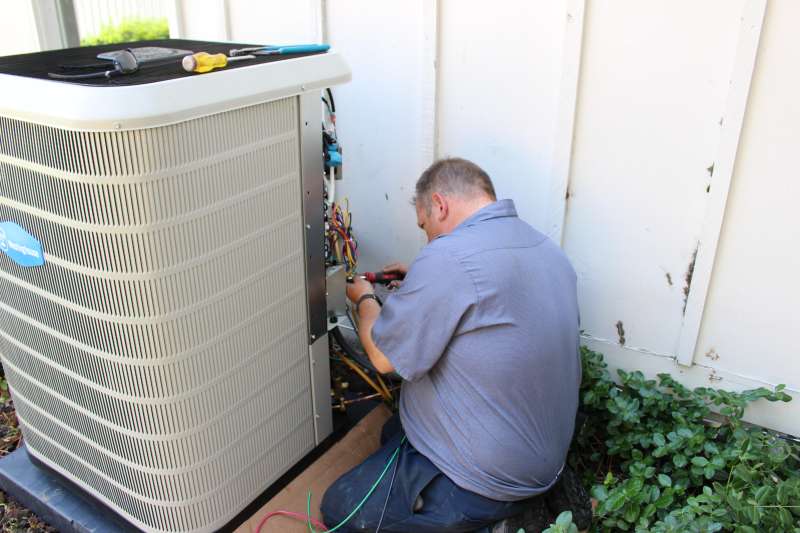
The Central Air Installation Process
It should take around a day to complete the installation. The major steps are summarized here.
Duct work installation or modification
- Any duct work should be limited in homes with existing furnaces or air conditioning, generally no more than an extra return line.
- If ducts must be placed, work with your contractor to disguise them in closets or soffits to minimize expensive drywall repairs.
- Duct work should be done before drywall is put in new construction.
Interior unit
- The evaporator coil is installed within the furnace plenum.
- The plenum is the part of the furnace on each side of the air handler where air enters and exits the home.
- The evaporator coil will enter the supply plenum, which serves as the furnace’s “outflow.”
Exterior unit
- Several considerations influence the positioning of the outside unit, including:
- The distance between the inside unit and the electrical service panel;
- The levelness of the ground;
- The proximity of the loud external unit to windows or doors;
- Distances needed by code from gas or water meters (refer to your local building department for specifics).
Connect the line set
- A pair of copper pipes connects the two parts of a split system, forming the direction the refrigerant will take.
- The most direct route from the evaporator to the condenser will primarily decide the course of the line set.
- If you have any issues regarding the route, communicate them to the contractor as soon as possible.
- To avoid water infiltration, the penetration to the external should be sealed.
Connect the Electrical Supply
- An outside cutoff will be required for the condenser unit.
- The electrical line will connect the condenser to the shutdown, then to the electrical service panel.
- If your circuit panel is already overloaded, you may need to update it to withstand the extra demand of the air conditioner.
If the project was planned properly, any work on the panel should already be included in the project estimate.
There will also be a low-voltage wire connecting the condensing unit to the furnace so it can be controlled by the thermostat.
Condensate Drain Line
- All air conditioners generate condensation, much like the sides of a glass of ice water. That condensation needs to be drained.
- Units located in a basement typically run to a floor drain.
- Units located in attics may pipe water outside, or may use a drain pan that allows water to evaporate — the same way refrigerators allow condensation to evaporate.
Thermostat
- When installing central air conditioning in a new home, you must select a thermostat.
- If you’re retrofitting central air conditioning into an older home, you may need to replace the thermostat with one that can also manage cooling.
- This is one phase in the process that is ideal for a little do-it-yourself effort.
- Some homeowners buy a basic thermostat for the installation and subsequently upgrade to a programmable or smart thermostat on their own.
Repair/Retrofit vs New Unit Installation
If air conditioning replacement is likely within the next few years or if you intend on transitioning to a new home heating system, you might want to give some thought to skipping the AC retrofit and go right to setting up a brand new energy-efficient, eco-friendly Central Air Conditioning system.

We can provide Central Air Conditioning Installation for all areas in Medford, MA including: Middlesex County, Tufts Univ, Tufts University, W Medford, West Medford, in Zip Codes 02153, 02155 and in Area Codes 617, 617, 339, 781
Also offering Central Air Conditioning Services throughout Middlesex County