

Central Air Conditioner Installation in Beaverton, OR
For the terrific bulk of homes, central air installation is complicated and laden with danger to try without expert help. This is owing to the know-how needed, the governmental wrangling of approvals and licensing requirements, and the danger of voiding guarantees if the elements are set up wrongly.
What do Central Air Conditioners do?
A central air conditioning conditioner cools air in one area before dispersing it throughout the residence using the heating system’s air handling capabilities. This sets it apart from window or wall air conditioning unit or mini-split systems, which all chill fairly small areas and need numerous systems to cool the whole home.
A lot of single-family houses in the United States with central air conditioning use a split system. This suggests that the gadget is divided into two parts: an evaporator coil within a compressor and the house exterior.
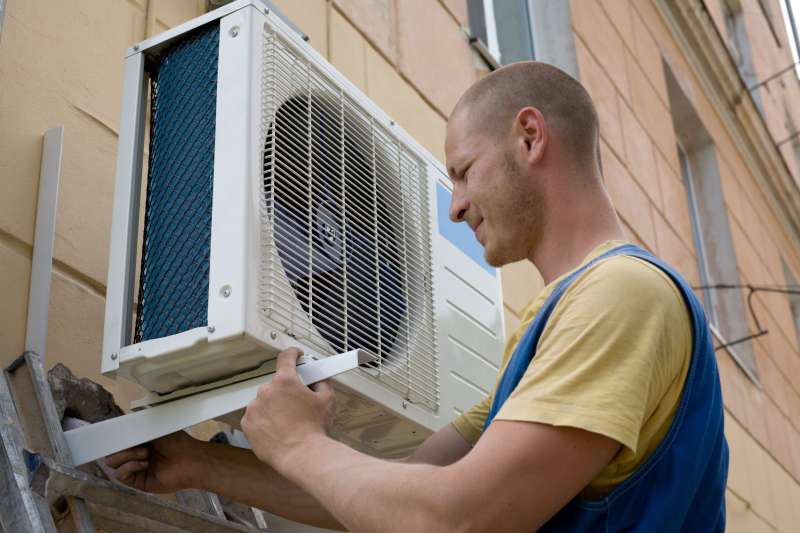
Working With Professional Central Air Conditioner Installers in Beaverton, OR
When speaking to professionals, inquire about their approach to the job. Also, focus on the questions they ask! An installer ought to ask clarifying concerns so that your preferences and decisions are represented in their quote and completion outcome.
Planning for Central Air Installation in in Beaverton
Setting up central air is a large endeavor that needs considerable preparation ahead of time. Request that your specialist check their procedure and validate that they will handle any needed licenses or other crucial documentation.
Talk about with your specialist how much you worth energy performance above initial expenditure. This is also an exceptional minute to go over the position of the condenser unit and the kind of thermostat you pick.
Sizing for your Central Air Conditioner
Your contractor will assist you in figuring out the proper size main air conditioner for your home. A unit that is too small will run practically continuously, whereas a system that is too large will chill the house too quickly and shut off before completing a complete cycle.
The quick on/off in the latter scenario is taxing on the system. It can trigger the evaporator coil to freeze, and a frozen coil prevents air from flowing. As a result, a big air conditioner may be less effective at cooling than a smaller sized system.
Your Air Conditioner installation will do a estimation known as a “Manual-J” to recognize best system for your house. This will consider all of the criteria we’ve pointed out and more, resulting in the most exact size possible.
Nevertheless, we understand that numerous house owners like to have a general notion of what size they require ahead of time. central air conditioning conditioner size: To get the Btu required, increase the square video of your home’s conditioned area by 25, then divide by 12,000 to get the tonnage.
Keep in mind that this is merely a fundamental price quote, and there are a number of aspects. If your house’s very first floor has 12-foot ceilings, the air conditioner will have more air to chill.
Getting an Estimate for a Central Air Conditioner in Beaverton, OR
When you’ve gone over the basic strategy and gone over design possibilities, the specialist needs to use you an estimate. As always, get written quotes from different service providers. The only exception would be if you’re installing cooling in a new house, considering that the builder will most likely handle it.
When working with a builder or independent HVAC specialist, don’t be reluctant to look for clarifying information or request cost breakdowns. Even if the professional is not able to information everything, they ought to be all set to interact sufficiently to help you feel more at ease with the treatment.

How Much Does Central Air Installation Cost?
Costs differ based on the local market and the task details, similar to any significant project. For labor and materials, a typical split system central air installation using an existing heater could cost in between $3,000 and $7,000 or more. Typically, that expense will be split around 60/40, with labor accounting for majority of it.
Bear in mind that you will most likely be paying complete retail rather than getting a industrial discount rate, so the entire expense of the project might not be cheaper than the professional’s quote. You’ll likewise need to perform your own sizing, and you’ll be held responsible if there are any problems with the devices.
If you’re changing an existing main air conditioning system, expect an extra price to eliminate and get rid of of the old system and refrigerant. When building a furnace and air conditioning system, the expense of each component is frequently reduced, while the general expense of the work is higher.
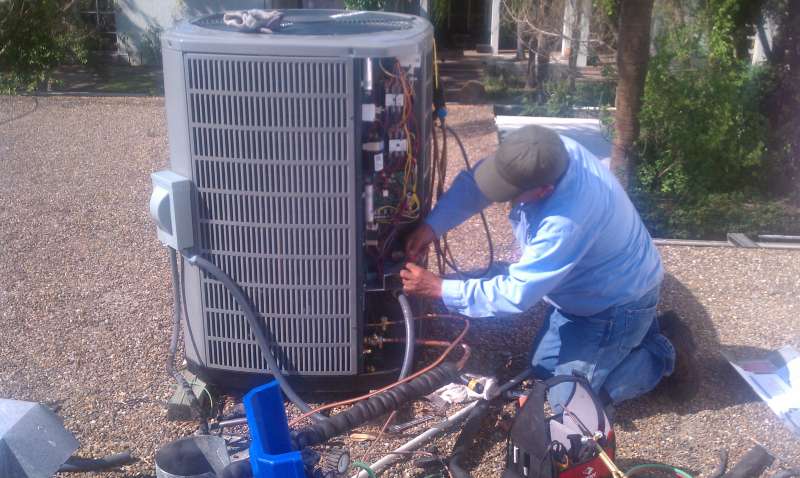
The Central Air Installation Process
It should take around a day to complete the installation. The major steps are summarized here.
Duct work installation or modification
- Any duct work should be limited in homes with existing furnaces or air conditioning, generally no more than an extra return line.
- If ducts must be placed, work with your contractor to disguise them in closets or soffits to minimize expensive drywall repairs.
- Duct work should be done before drywall is put in new construction.
Interior unit
- The evaporator coil is installed within the furnace plenum.
- The plenum is the part of the furnace on each side of the air handler where air enters and exits the home.
- The evaporator coil will enter the supply plenum, which serves as the furnace’s “outflow.”
Exterior unit
- Several considerations influence the positioning of the outside unit, including:
- The distance between the inside unit and the electrical service panel;
- The levelness of the ground;
- The proximity of the loud external unit to windows or doors;
- Distances needed by code from gas or water meters (refer to your local building department for specifics).
Connect the line set
- A pair of copper pipes connects the two parts of a split system, forming the direction the refrigerant will take.
- The most direct route from the evaporator to the condenser will primarily decide the course of the line set.
- If you have any issues regarding the route, communicate them to the contractor as soon as possible.
- To avoid water infiltration, the penetration to the external should be sealed.
Connect the Electrical Supply
- An outside cutoff will be required for the condenser unit.
- The electrical line will connect the condenser to the shutdown, then to the electrical service panel.
- If your circuit panel is already overloaded, you may need to update it to withstand the extra demand of the air conditioner.
If the project was planned properly, any work on the panel should already be included in the project estimate.
There will also be a low-voltage wire connecting the condensing unit to the furnace so it can be controlled by the thermostat.
Condensate Drain Line
- All air conditioners generate condensation, much like the sides of a glass of ice water. That condensation needs to be drained.
- Units located in a basement typically run to a floor drain.
- Units located in attics may pipe water outside, or may use a drain pan that allows water to evaporate — the same way refrigerators allow condensation to evaporate.
Thermostat
- When installing central air conditioning in a new home, you must select a thermostat.
- If you’re retrofitting central air conditioning into an older home, you may need to replace the thermostat with one that can also manage cooling.
- This is one phase in the process that is ideal for a little do-it-yourself effort.
- Some homeowners buy a basic thermostat for the installation and subsequently upgrade to a programmable or smart thermostat on their own.
Repair/Retrofit vs New Unit Installation
If air conditioning replacement is likely within the next few years or if you intend on transitioning to a new home heating system, you might want to give some thought to skipping the AC retrofit and go right to setting up a brand new energy-efficient, eco-friendly Central Air Conditioning system.
We can provide Central Air Conditioning Installation for all areas in Beaverton, OR including: , Aloha, Hillsboro, Aloha, First Consumers Nat Bank, Progress, Hillsboro, Tektronix, Shared Reshipper, in Zip Codes 97005, 97006, 97007, 97008, 97075, 97076, 97077, 97078, 97079, 97250 and in Area Codes 503, 971, 971, 503
Also offering Central Air Conditioning Services throughout